Every wedding planning guide will tell you to choose seasonal flowers. And if you're going fresh, that's genuinely good advice. Seasonal blooms are more available, more affordable, and more likely to arrive in good condition. But here's what those guides don't mention: seasonality is a fresh flower problem. And a lot of Australian couples are quietly opting out of it entirely.
Before we get into that, let's run through what's actually beautiful in each season in Australia, because our wedding calendar genuinely has a lot going for it.
All four seasons covered: Spring (September to November) · Summer (December to February) · Autumn (March to May) · Winter (June to August) · Plus: why more couples are ditching the seasonal rulebook altogether
🌸 spring weddings
Spring: September to November
Spring is peak wedding season in Australia for good reason. The weather is warm without being brutal, venues look their best, and the natural landscape is doing a lot of the heavy lifting. The aesthetic modern spring couples are gravitating toward has shifted toward looser, more organic arrangements that feel gathered from a garden rather than assembled in a studio. Ranunculus, sweet peas, anemones, and garden roses tumbling together with soft foliage. Effortlessly beautiful, and it photographs incredibly well.
Peonies remain the most searched wedding flower in Australia and peak in spring, but they have a narrow window, sell out fast, and fresh florists are stretched thin across the season. If your heart is set on a specific bloom, spring is when you're most likely to be told it's unavailable or will be substituted.
☀️ summer weddings
Summer: December to February
Australian summers are stunning and brutal in equal measure. Outdoor ceremonies at 35 degrees are beautiful in photos and genuinely challenging for fresh florals. Blooms wilt faster, bouquets need to stay in water until the last possible moment, and anything delicate is a risk on a hot day.
Summer-friendly fresh flowers tend to be hardier varieties: orchids, anthuriums, tropical blooms, and robust greenery. Light, airy arrangements work better than heavy, densely packed bouquets in the heat. The colour palettes that photograph best in summer light are crisp whites and greens, vibrant corals and oranges, or deep jewel tones that hold their saturation in bright conditions.
Autumn: March to May
Autumn is quietly one of the best seasons for weddings in Australia. The heat has broken, the light turns golden, and the colour palette opens up beautifully. Rich burgundies, warm terracottas, deep plums, and burnt orange all come into their own. It's genuinely our favourite season for moody, romantic wedding aesthetics.
Dahlias, which peak in autumn, are one of the most dramatic and photogenic wedding flowers available. Garden roses continue from summer, and natives like protea and banksia add texture and an unmistakably Australian feel. Autumn also tends to have more florist availability than peak spring, which gives you more flexibility if you're booking later.
Autumn is when the rich, layered palettes we absolutely love (think burgundy, fig, merlot, and deep green) look most natural and at home in the environment around them. An autumn wedding with these tones is just chef's kiss.
Winter: June to August
Winter weddings in Australia, particularly in Queensland and northern NSW, are often the best-kept secret in the whole wedding calendar. The weather is mild, venues are less booked, and the styling opportunities are genuinely beautiful. Cool-weather blooms like hellebores, ranunculus, tulips, and anemones are at their best. Deep, moody palettes like forest green, burgundy, and dusty rose photograph beautifully in the softer winter light.
The consideration: winter can bring supply challenges for certain blooms, and in cooler southern states some varieties aren't available locally and need to be imported, which affects both cost and freshness.
"Here's the honest truth fresh florists rarely put in writing: even 'in season' flowers can be unavailable, undersized, or substituted. Sometimes with very little notice."
Why More Couples Are Ditching the Seasonal Rulebook
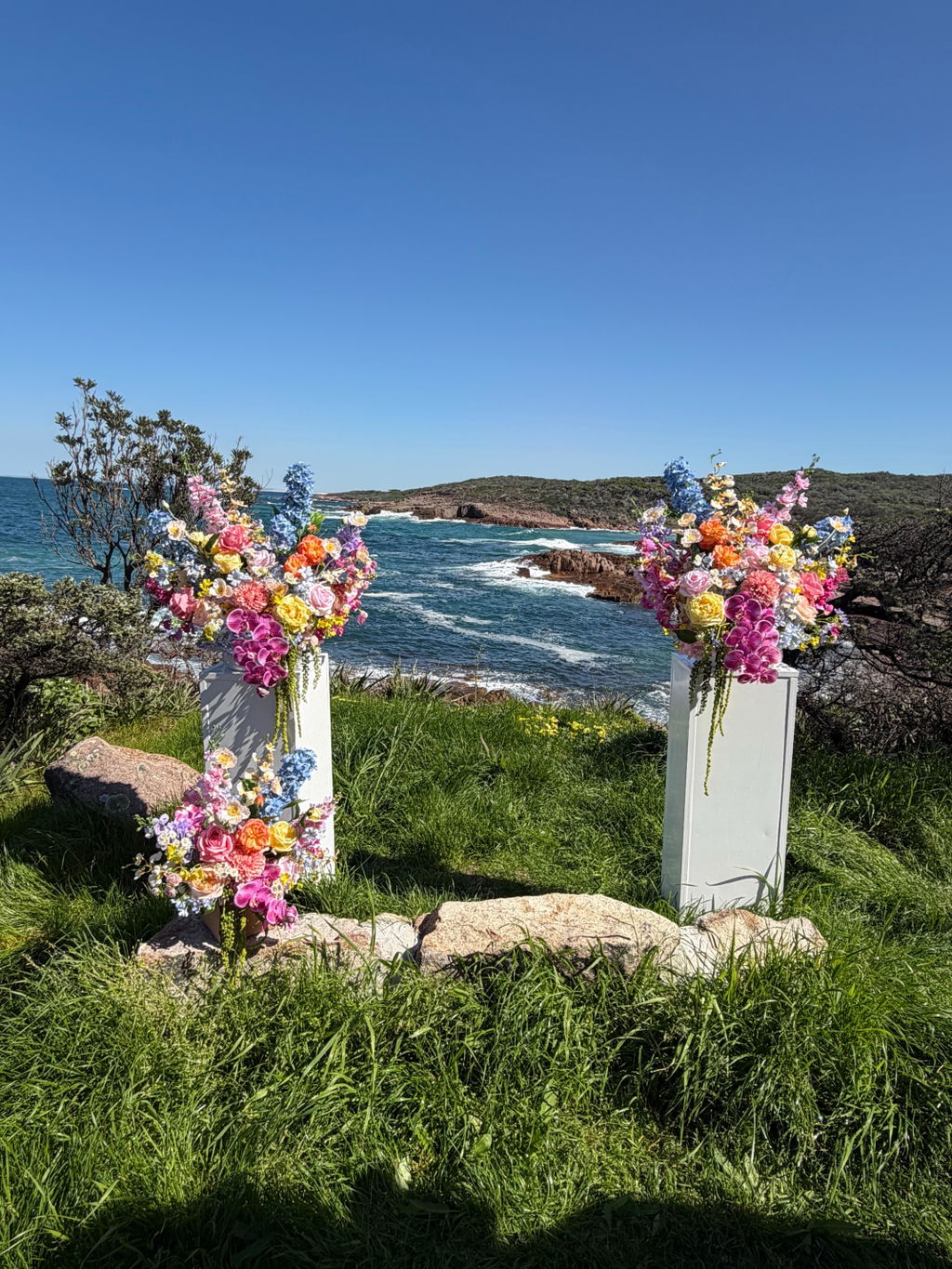
Premium artificial wedding flowers exist completely outside the seasonal system. Peonies in December? Yes. Ranunculus at a February beach wedding? No problem. Dahlias in July? Absolutely.
But seasonality isn't the only limitation faux removes. Colour is too. Fresh blooms exist within the boundaries of what nature produces, and nature doesn't always cooperate with your vision board. That specific shade of dusty mauve, the deep espresso rose, the soft champagne peony with just the right blush at the centre. Fresh flowers can get close. They can't always get there.
Premium faux opens up a colour range that simply isn't achievable with fresh. Consistent saturation from ceremony to reception. Exact colourways that match your dress, your bridesmaids, your venue palette. No fading, no browning edges, no "this isn't quite the shade we discussed." What you choose is what shows up. And what shows up in every photo for the rest of your life.
💬 seasonal questions