If you've tried to Google how many flowers you need for your wedding, you've probably come away more confused than when you started. Most guides are written for fresh flowers, which play by slightly different rules. And the honest answer is: there is no single magic number. What you need depends on your budget, your vision, your venue, and how much of the visual weight you want flowers to carry on the day.
This guide walks through every area where florals typically appear, gives you a realistic starting point for thinking about quantities, and helps you figure out what actually makes sense for your day specifically.
What we're covering: The variables that change everything · Bridal party flowers · Ceremony florals · Reception styling · The repurposing advantage · Our honest summary
🤔 the variables first
The Things That Change Everything
Before we get into specific areas, let's talk about the factors that actually drive these decisions, because they'll shape every quantity conversation you have.
Your budget is one of the biggest. With faux florals, you have the significant advantage of reusing arrangements across your ceremony and reception and taking everything home afterward to gift, restyle, or sell. That investment angle changes the quantity equation. But it still starts with knowing what you want to spend.
Your venue size and style matters enormously. A 30-person garden ceremony needs a completely different approach to a 150-person ballroom. High ceilings call for height. Intimate venues call for texture and intimacy. Your venue is your canvas.
Your personal aesthetic drives it too. Are you a maximalist who wants flowers absolutely everywhere? Or are you drawn to intentional simplicity and negative space? Neither is wrong. But they'll give you very different quantity requirements.
How much work florals are doing relative to your other decor elements. If flowers are your main styling tool, you'll need more. If you're supplementing with candles, draping, and signage, florals can work harder with less.
💐 bridal party
The Bridal Party
This is usually where couples start, and it's the easiest to plan because quantities are tied to actual headcount.
Bouquets: One bridal bouquet, one per bridesmaid. The bridal bouquet is typically larger and more considered than the bridesmaids', creating a natural hierarchy that reads beautifully in photos. If you have a large bridal party, scaling the bridesmaids to a smaller en masse style keeps costs in check without anything looking underdone. Flower girls can carry a small posy or a basket of petals if you'd like them included.
Buttonholes and corsages: One buttonhole per groomsman, one for the groom, then consider anyone else you want to include: fathers, stepparents, grandfathers. It's easy to forget people until the day, so do a proper headcount early. Some couples skip these entirely, and that's a perfectly valid call.
Ceremony Florals
Your ceremony space carries a lot of visual weight. Guests spend a concentrated block of time looking at the same view, which means ceremony florals are some of the highest-impact pieces of your whole day. You don't need to do everything. Pick your moments.
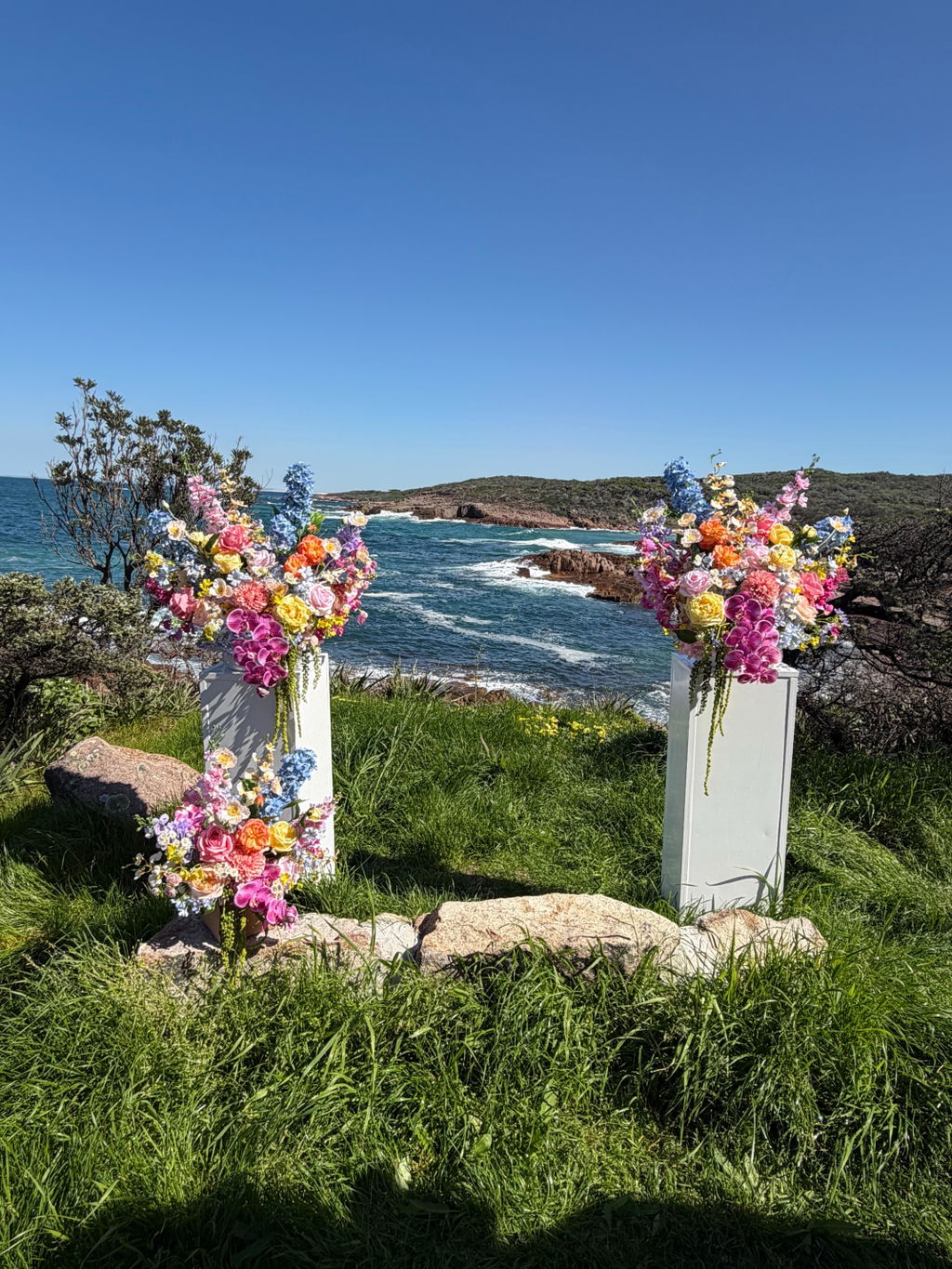
The ceremony backdrop. A single centred piece framing you at the end of the aisle keeps things clean and intentional. Several pieces together give a fuller, more dramatic look. Prefer something grounded? A ceremony arrangement on either side of the aisle creates a beautiful frame without an overhead structure. More pieces with varying heights give you the full floral moment. Fewer pieces gives you something more refined. Totally up to your vision and your budget.
Aisle markers. Not essential, but a lovely way to elevate the space. Two arrangements at the beginning of the aisle makes an impact without a large investment. From there, add as many as you like along the length to really build the look. The more you add, the more considered and styled the whole space feels.
Pro tip: Skip the signing table arrangement altogether and place your bridal bouquet in a vase while you sign. It looks intentional, photographs beautifully, and is one less thing to budget for.
Reception Florals
This is usually where couples start doing mental arithmetic and realise how quickly things add up. The space is larger, there are more surfaces to dress, and guests are there for hours. Prioritise accordingly.
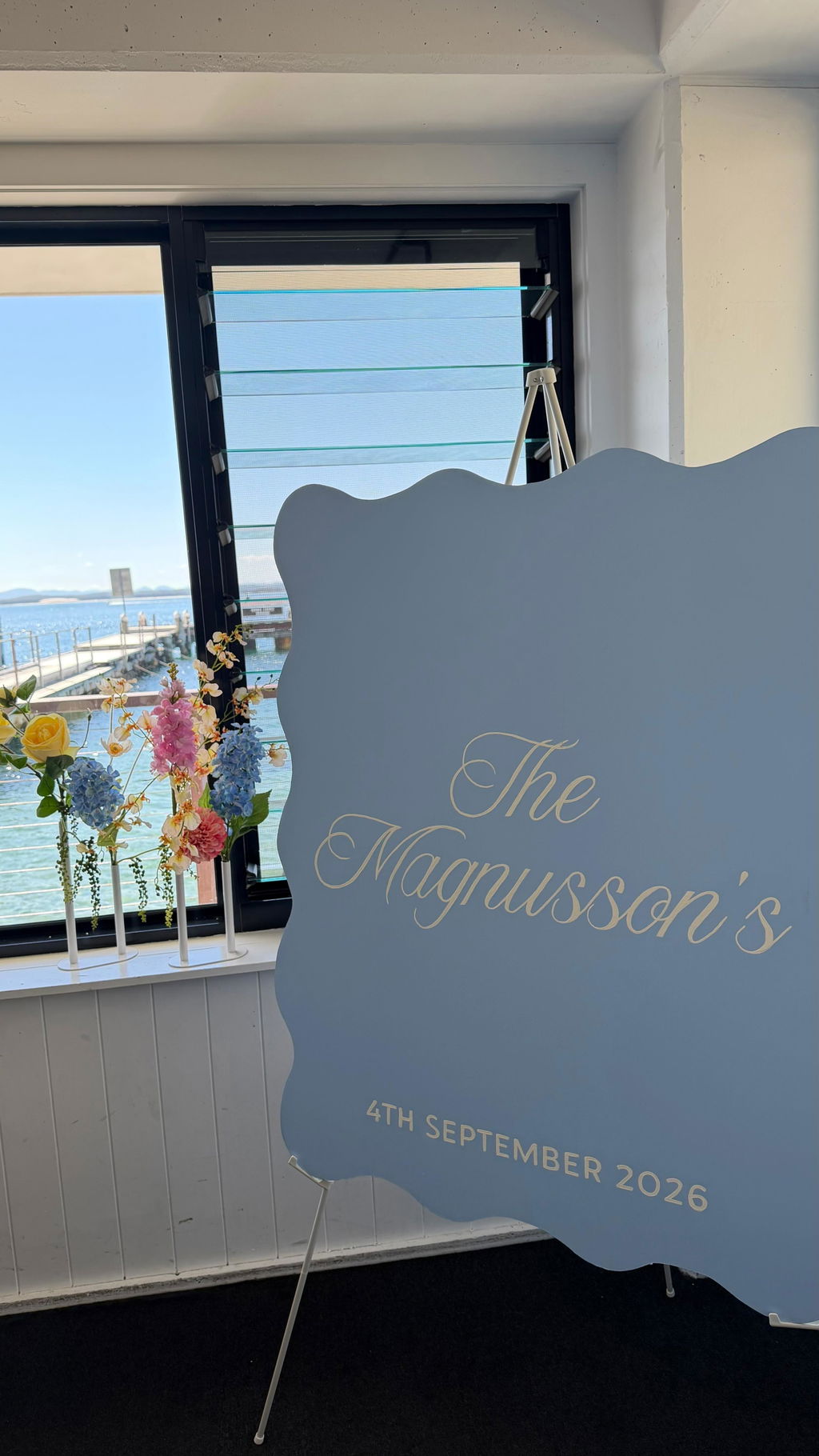
Centrepieces: The style of centrepiece changes the feel of the room significantly. Tall arrangements create drama and formality. Low arrangements keep intimacy at the table. Clusters of bud vases feel relaxed and current. None is more right than the others. Confirm your table configuration with your venue before finalising anything, as long trestle tables need a different approach to round tables.
Bud vases: As a starting point, think one vase per four guests at a table. Pair with candles or other elements if you want a fuller look without adding more arrangements.
Get Double Duty from Every Piece
This is one of the biggest advantages of faux florals that most guides completely miss. Your ceremony pieces don't have to stay in the ceremony space. Arbour florals can become the sweetheart table backdrop. Aisle arrangements become reception centrepieces. Ceremony plinths frame the bar or welcome signage. You effectively get two sets of florals for the price of one, which changes the quantity equation entirely for couples who plan this properly.
If you're budgeting carefully, plan for repurposing from the start. Design your ceremony pieces to do a second job, and your overall floral investment stretches considerably further.
"Some of the most beautiful weddings we've worked on had fewer flowers than you'd expect. Placement, intention, and knowing what you actually love will always go further than quantity alone."
💬 quantity questions